Final Results
Round 2, which concluded Hacks for Democracy on Friday, October 5th, saw more improved apps, larger prizes, and a "surprise ending." The award winners were:
- Most Improved, $300: SEPTA Routes and Reps
- Best Geospatial App, $300: Undecided - a geographic Philadelphia election/voter turnout model
- Greatest Potential Impact, $300: State Gov Tracker
The surprise ending? All teams that made it through to the final round, including Electory, got $150 to go towards hosting and development costs in the future. A great decision by our judges!
For video of the demos and awards:
- Demos: Livestream
- Awards: Livestream
Round 1 Results
Here are the results of Round 1, which ended on Sunday, September 16:
- 1st place, $250: Yo! Philly Votes
- 2nd place, $150: VoterID.me
- 3rd place, $100: Electory
In Round 2, which will go on until Friday, October 5th, there are 3 prizes of $500 going to most improved, best geospatial app, and greatest potential impact. Keep your teams together and continue hacking!
Live Video Stream
When events are in progress, click the link above to be taken to our video stream.
The Friday evening pre-hackathon video is here.
The Round 1 project demos on Sunday video is here.
The Round 1 judging results video is here.
Event Details
Democracy is not inevitable or a given; it must be sustained and strengthened by each generation. Today, American democracy is challenged by unlimited political contributions, polarized legislatures, gerrymandered districts and opaque processes.
But efforts such as the Voting Information Project, open government data repositories, online voting, ParliamentWatch and TheyWorkForYou have demonstrated that technology can make an important contribution toward improving our democratic institutions.
Do you have an idea for an app that will improve this fall's election? What tools do we need to improve citizen engagement? Is there an app that would get your friends to the voting booth in November? What app might help mitigate the impact of voter ID laws? What data would make your local city council and board of elections more transparent?
Join civic hackers, election officials, journalists, data analysts and designers to make progress on these and other questions related to elections and politics.
This effort will begin with a brainstorming session on Friday, September 14 before the main hackathon event over the weekend of September 15-16. But we are also going to encourage the continued development of the projects that emerge from the hackathon event by hosting a series of follow-up events, culminating in a second round of judging on October 5, one month before the general election. And, yes… hackers will be fed at all events!
Oh, and there will be prizes. We’ll crown the best projects from the weekend on the afternoon of Sunday, Sept 16, but then we’ll have a second round of judging and prizes three weeks later, for applications that have been rolled out or are most improved since the hackathon.
Twitter hashtag: #hacks4d
Here’s the full schedule:
- Fri, Sept 14, 6:30pm – 8:30pm, API and Project Idea Presentations, Azavea, 340 N 12th St, Ste 402
- Sat, Sept 15, 9am – 5pm, Hackathon, Venturef0rth, 417 N 8th St, 2nd fl, Philadelphia, PA 19123
- Sun, Sept 16, 9am – 5pm, Hackathon, Venturef0rth, 417 N 8th St, 2nd fl, Philadelphia, PA 19123
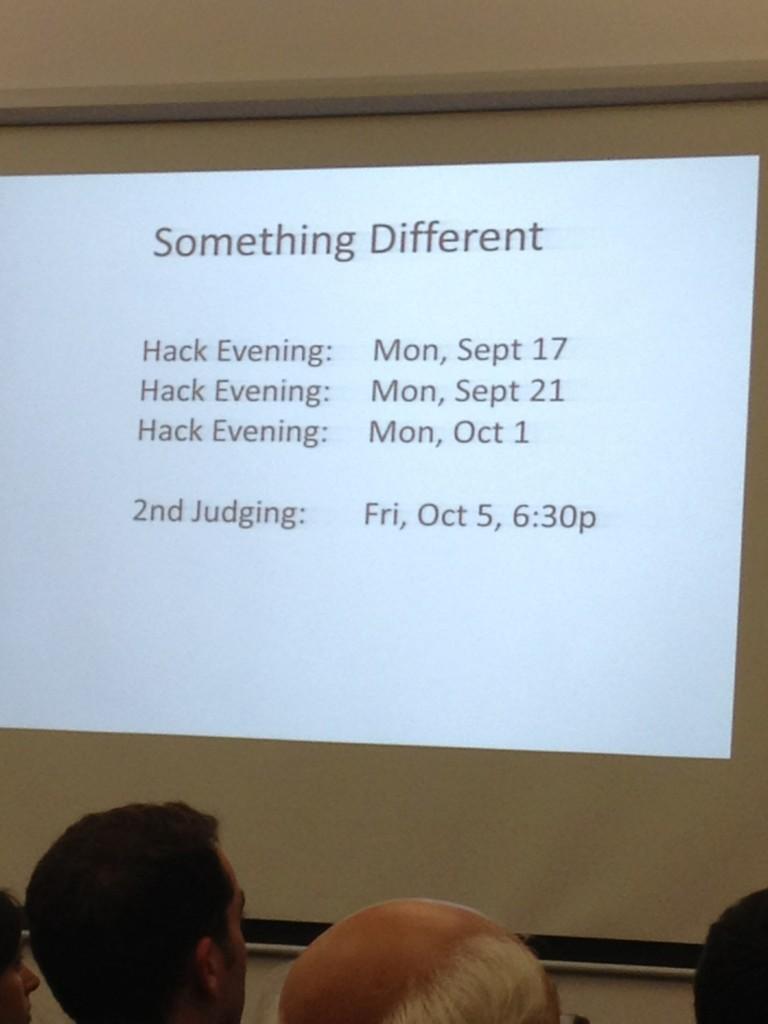
- Mon, Sept 17, 6pm – 9pm, Hack evening, Azavea, 340 N 12th St, Suite 402
- Mon, Sept 24, 6pm – 9pm, Hack evening, Azavea, 340 N 12th St, Suite 402
- Mon, Oct 1, 6pm – 9pm, Hack evening, Azavea, 340 N 12th St, Suite 402
- Fri, Oct 5, 6:30pm – 8:30pm, Final Judging and Awards, Azavea, 340 N 12th St, Suite 402
We are encouraging both existing and new projects. The only criteria are:
- Projects should be related to elections, democracy and politics
- The work be made available under an open source license(or if data-related, then a Creative Commons or open data license) so that others can use it, remix it and mash it up.
Registration: $5
Official Rules
- Registration. Online registration ends at 10:00 pm EDT on Sept 14, 2012 or when maximum event capacity is reached. We encourage you to register early to ensure a spot! Walk-in registrations on Sept 15 will be allowed only if the event has remaining capacity.
- Cost. $5 for all 7 events.
- Start & End Times. Teams may begin working at 9:00am EDT on Saturday, Sept 15 and must complete by around 3pm EDT on Sunday, Sept 16. Teams are encouraged to discuss their ideas and sketch out a plan for their application prior to the event.
- Topics. You can work on any area related to elections, politics and democracy that is of interest to you. We’ve put together a resources page where you can find data sets and APIs. But feel free to can pull in additional sources as well.
- Languages & Tools. You can build your apps using any mix of programming languages, frameworks, and development tools. Participants are expected to bring the necessary hardware and software tools to build the apps – you need to bring your laptop. Internet access via WiFi will be provided.
- Judging. A panel of judges from various domains will score competitors on concept, design, originality, impact, and functionality. Teams will have a maximum of (4) minutes to demonstrate their running application to the judging panel.
- Prizes. There will be prizes, but we won’t know what they will be until closer to the event. If you win, your awesome-ness will be recognized, but this is a civic hacking event, and you should not expect to hit the jackpot.
- Open Source. If you want to be judged and win a prize, you will need to make your work available under an open source license so that others can use it, remix it and mash it up.
- Source Code Rights. Neither Hacks for Democracy nor Azavea make any claim to intellectual property, source code, documentation or applications developed as part of this event.
- Press Release. By participating in Hacks for Democracy, participants grant organizers and participating members of the media rights to publicly disclose competition event information, review and describe applications developed and presented during the event, and rights to display event-related photos, screen shots, and links to publicly available demonstrations of contest entries.
- Rules Changes. Hacks for Democracy reserves the right to make rules modifications prior to the start of the event.
FAQ
- I’m not a developer. Can I participate? Absolutely! The ideal team would have a mix of developers, designers, data analysts and marketers. Judges will score applications based on a variety of criteria, including visual/UI design and the quality of the data included.
- Do I have to create software? No. While web and mobile applications are the most common outcome of a hackathon, you could also create a stunning data visualization, develop a new data source or other outcome related to technology and politics.
- Can I bring a pre-existing project? We hope that some teams will form around existing projects. For example, you might extend Ushahidi to develop a polling place reporting system. Or you might improve on an existing open source project, such as DistrictBuilder. We will judge teams based on the work they accomplished in the weekend, though, rather than the pre-existing tools.
- The hackathon is in Philadelphia; do I have to work on a project related to Philadelphia politics? Nope. The hackathon is being organized by Azavea and Philadelphia is our home town, but you can work on local, state, national or even international concerns.
- Can I bring an idea? We want you to bring ideas. Participants are encouraged to utilize the HackerLeague platform to form teams, suggest ideas, collaborate on concepts, or review and discuss data sets and APIs.
- Can I bring a team? Yup. We’d be thrilled if you made new friends and formed ad hoc teams, but you are welcome to bring your own team.
- Can I come alone? Totally! There will be opportunities at the kickoff on Friday, September 14 to meet other participants and hear about other ideas. You’re also encouraged to find and form teams online at HackerLeague.
- Can I bring my own food and snacks? Meals, beverages, and snacks will be provided for all participants. If you have special requirements you may want to consider bringing your own provisions, but we cannot guarantee that there will be refrigeration space for perishables.
Resources
Below are some APIs you might find helpful to use.
For more information on Sunlight Foundation APIs, refer to Bob Lannon's presentation and/or contact him directly (details in the presentation).
Anthea Watson at the Google Elections Team has composed a spreadsheet of many politics and civic apis available here.
For more information on the New York Times APIs (campaign finance, congress, fech, articles), please refer to Michael Strickland's presentation at http://bit.ly/politics-apis
APIs
| Resource | Provider | Description |
|---|---|---|
| Bill Positions API | MapLight | Bill positions for U.S. Congress and California |
| Campaign Finance API | Washington Post | Data, compiled from the FEC, including a listing of candidates, committees and committee summary data. |
| Capital Words API | Sunlight Foundation | Historical record of all words used by members of congress, including word frequency by legislator and by state |
| Cicero API | Azavea | Elections, elected officials contact info, district maps, geocoding and district ID features. Data is at local, state and national level for US, Canada, Australia, New Zealand and UK. Want to play? Sign up for a free 90-day developer account here. In addition to the free trial, as a product sponsor Cicero is offering hackathon teams 9,000 free non-geocoding API credits for 6 months. |
| Congress API | Sunlight Foundation | Info about members of Congress |
| Fed Spending API | OMB Watch | Federal contracts, assistance and recovery spending |
| Freedom Speaks API | Freedom Speaks | Contact information for over 40,000 federal, state and local elected officials |
| Influence Explorer API | Sunlight Foundation | Summary data for campaign finance, lobbying, earmark, contractor misconduct and federal spending data |
| Moonshadow US Census data service | Moonshadow | Data visualization APIs for generating maps of demographics and voter registration data |
| New York Times Campaign Finance API | New York Times | Federal campaign finance data for various time periods |
| NationBuilder Election Center API | NationBuilder | NationBuilder Election Center offers a RESTful API that you can use to build great apps for political campaigns. The API offers access to NationBuilder's world-class database of voter data, political and geographic region boundaries, and information about the campaigns using your app. |
| Open States API | Sunlight Foundation | State legislative activities, bill summaries, votes, sponsorships and legislator information |
| Open Secrets API | Center for Responsive Politics | Financial disclosure statements and summary contribution data for federal candidates or members |
| Presidential Campaign Issue Engine API | Washington Post | Stores transcripts and statements for Barack Obama & Mitt Romney |
| PA Voter ID API | VoteInPa.com | Cross-references voter registration and PennDOT ID status, identifying potential problems at the polls |
| Real-Time Congress API | Sunlight Foundation | Documents and other artifacts generated by Congress, including bills, votes, hearing transcripts, videos, etc. |
| VoteSmart API | Project Vote Smart | Address, Candidate Bio, Candidates, Committee, District, Elections, Leadership, Local, Office, Officials, Rating, State, Votes |
| Voter Guild Toolkit | e.thePeople | Voter guide and ballot item choices |
| Voting Information Project - Google Civic Information API | Provides data from the Voting Information Project (VIP). This API used to require an application, but is now public. | |
| Voting Information Project – Microsoft Azure API | Microsoft | Provides data from the Voting Information Project (VIP) |
| White House Visitors Log API | Washington Post | Stores information on White House visits since January 2009. The API has logged more than 2.2 million visits with more being added quarterly. |
Philadelphia/Pennsylvania Data Sets
| Resource | Provider | Description |
|---|---|---|
| City Council Districts 1990 | City of Philadelphia | |
| City Council Districts 2002 | City of Philadelphia | |
| City Council Districts 2015 | City of Philadelphia | |
| City Council Legislation API | Mjumbe Poe | |
| Election Results 2002 – 2012 | Campaign Scientific | |
| PA State House Boundaries 2000 | PA Dept of Transportation | |
| PA State Senate 2000 | PA Dept of Transportation | |
| PA Voting Districts 2011 | PA Legislative Reapportionment Commission | Type: Esri Shapefile The most current voting district boundaries available as of August 22, 2011. Also contains 2010 Census demographic data aggregated to each district. |
| Philadelphia Polling Places | City of Philadelphia | API Service for Polling Place maps and locations. Map also available here: http://www.phila.gov/map#id=f2138aed8c1442d58235dcfa84e5643f |
| Philadelphia Polling Places | Committee of Seventy | Type: Excel List of Philadelphia polling places as of September 2012. NOTE: These are not finalized and records marked with an asterisk may change before the November election. |
| Philadelphia 2012 Primary Turnout | City of Philadelphia | CSV file of Public Primary voter turnout by Ward Division |
| Ward Divisions w/ Polling Places CSV | City of Philadelphia | CSV file of Polling Places attached to Ward Division |
| Ward Divisions w/ Polling Places SHP | City of Philadelphia | Shapefile of Polling Places attached to Ward Division |
| Ward boundaries | City of Philadelphia | |
| Ward Division boundaries | City of Philadelphia |
Other Resources
| Resource | Provider | Description |
|---|---|---|
| 2012 US Congressional Districts | Cicero API | Type: Esri shapefile New congressional districts drawn after the 2010 Census going into effect for the 2012 election. |
| CartoDB | Vizzuality | Online services support storage and visualization of geospatial data on the web. Create maps, analyze your data, and build location aware apps all with CartoDB. As a product sponsor, CartoDB is offering hackathon teams 1 year of their "Magellan" plan (normally $29/month) for free. |
| Congressional Bills and Resolutions | GovTrack | Bills and resolutions are stored in data/us/112/bills for the current Congress and similarly named directories for all Congresses. |
| Congressional People Directory | GovTrack | A list of everyone that has ever served in Congress as well as U.S. Presidents with their party affiliation, terms in Congress, birthdays, etc. |
| Congressional Roll Call Votes | GovTrack | Roll call votes (excludes votes by unanimous consent) are stored in data/us/112/rolls for the current Congress and similarly named directories for other Congresses. |
| Congressional Photos | GovTrack | Photos for each Member of Congress (both past and present). Photos are named with GovTrack ID plus size indicator. |
| Fech | New York Times | Fech makes it easy to parse electronic campaign finance filings by candidates, parties and political action committees from the Federal Election Commission. It lets you access filing attributes the same way regardless of filing version, and works as a framework for cleaning and filing data. |
| Political Party Platforms | Joshua Tauberer | The 2012 Republican and Democratic Party platforms converted into XML. |
Active Projects
Philly Voter Turnout Model using GeoTrellis
State Gov Tracker - using Cicero
Routes-N-Reps - using Cicero, example app here
Voterid.me: Mobile friendly site to solve confusion about state Voter ID laws - Bula - Site is live here.
Electory - Philadelphia Committeepeople and local politics app
Yo! Philly Votes - realtime election day incident reporting based on ushahidi
Other Ideas Presented
Compiling a dataset on Philadelphia Committeepeople - James Bazis and Tim Wisniewski
Smartphone app to Identify and Verify Voter ID's through image processing - Howard Bilofsky
Visualization of What One Person, One Vote Means - Erin McLeary
"Nag the Voter" - Geofencing reminder app to vote on election day - Jared Marcotte
You-PAC: Way for voters to talk back to campaigns during election year - Chris Satullo
Patriot Dollars Market: Virtual money app that voters can give to or use to penalize campaigns for the actions they take - Chris Satullo
Yo! Philly Votes: Ushahidi-based election day incident reporting through social media aggregation - Faye Anderson and Joe Tricarico
Electronic voting for non-formal community polling - Tim Wisniewski
Myballot: Make your own ballot from ballotpedia and other sources so you can remember which names to vote for in the polling booth
VoteOrPay: Commit $5 to voting on election day, if you forget, your money is donated to charities/the opposite political party
Voter ID API - initial code available on Dave Walk's github page - Mark Headd
Foursquare for local government projects and decisions